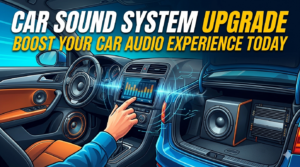
Are you one of the many drivers who spend hours in their car each week, only to be met with a sound system that just… exists? Perhaps you’re tired of music that sounds muffled, podcasts that lack clarity, or navigation prompts that get lost in the drone of road noise. If your daily commute feels more like a muted background track than a vibrant soundscape, you’re not alone. Thousands of people are searching for “car audio near me” every day, eager to transform their driving experience from mundane to magnificent. It’s time to stop settling and start enjoying every beat, every word, and every note with an audio system that truly performs.
Is Your Car’s Sound System Falling Flat? It’s Time for an Upgrade!
Let’s be honest: for most car manufacturers, the audio system is rarely a top priority. While modern vehicles boast incredible technology, the stock stereo often gets the short end of the stick. You might be experiencing muddy bass that lacks definition, tinny highs that hurt your ears, or a complete absence of mid-range clarity, leaving your favorite tracks sounding hollow and lifeless. This isn’t just an inconvenience; it can actively detract from your driving pleasure, making long trips feel even longer and turning your cherished music into background noise you barely notice.
Many drivers, myself included, have felt that familiar pang of disappointment when a beloved song comes on, only to be butchered by weak factory speakers. It’s a common frustration, and it’s precisely why the search for “car audio near me” is so popular. People are actively seeking solutions to these common problems because they understand the profound impact a great sound system can have.
An upgrade isn’t just about making things louder; it’s about unlocking a level of detail and immersion you never thought possible within the confines of your vehicle. Imagine crystal-clear navigation instructions that cut through traffic noise, allowing you to focus on the road. Picture your favorite podcast host’s voice sounding like they’re right there in the passenger seat, engaging and easy to understand. Envision your music coming alive with rich, resonant bass, sparkling highs, and a balanced, detailed soundstage that puts you right in the middle of the performance. These aren’t just dreams; they’re the immediate, tangible benefits of investing in an enhanced audio quality setup. It transforms your car from a mere mode of transport into a personal sanctuary where sound reigns supreme.
Why Invest in a Car Audio Upgrade? Beyond Just Louder Music
The decision to upgrade your car’s audio system goes far beyond simply turning up the volume. It’s an investment in your daily enjoyment, your vehicle’s overall appeal, and even your driving safety.
Elevated Listening Experience
- This is the most obvious benefit, but it’s also the most profound. A high-quality audio system delivers richer bass that you can feel, crisp highs that add sparkle without harshness, and a detailed mid-range that brings vocals and instruments to life. It’s the difference between hearing a song and truly experiencing it, uncovering nuances you never knew existed in your favorite tracks. Imagine hearing every strum of a guitar, every breath of a singer, and the distinct layers of a symphony, all while cruising down the highway.
Enhanced Driving Pleasure
- Believe it or not, a superior sound environment can significantly improve your driving experience. Poor audio quality can be fatiguing, forcing your brain to work harder to decipher sounds, leading to increased stress and reduced focus, especially on longer journeys. A clear, well-balanced system reduces this cognitive load, making long drives more enjoyable and less tiring. It can even make rush hour traffic a little more bearable when you’re immersed in your perfect playlist.
Increased Vehicle Value & Appeal
- While not always the primary motivation, a professionally installed, high-quality audio system can certainly add a desirable feature to your vehicle. If you ever decide to sell, a well-documented, top-tier audio setup can make your car stand out in the market, appealing to buyers who value premium features. It shows potential buyers that you cared for your vehicle and invested in its enhancements.
Personalization & Control
- Stock systems often offer limited sound adjustments. Upgrading gives you unparalleled control. With advanced equalizers, digital sound processing (DSP), and customizable settings, you can tailor the audio output precisely to your specific preferences and the unique acoustics of your car’s cabin. Want more bass for hip-hop? Less for classical? You’re in command.
Integration with Modern Tech
- Many factory head units lag behind current technology. A new, cutting-edge head unit can seamlessly integrate your smartphone with features like Apple CarPlay and Android Auto, providing intuitive access to navigation, music streaming, hands-free calling, and voice assistants. Bluetooth connectivity, USB ports, and even built-in navigation systems become standard, bringing your vehicle into the modern age of connectivity.
Decoding Your Car Audio Upgrade Options: Components & Systems
Understanding the various components of a car audio system is key to making informed decisions. Each piece plays a vital role in the overall sound quality and performance.
Head Units (Receivers)
- This is the brain of your car’s audio system, controlling all inputs and outputs.
- Single-DIN vs. Double-DIN: These refer to standard sizing. Single-DIN units are narrower, while double-DIN units are twice as tall, often accommodating larger touchscreens.
- Digital Media Receivers: These forgo a CD player in favor of digital media playback (USB, Bluetooth, streaming), often offering larger screens and more advanced features.
- Key Features: Look for Apple CarPlay and Android Auto for seamless smartphone integration, Bluetooth for wireless streaming and hands-free calls, high-resolution audio support, and multiple pre-amp outputs for connecting external amplifiers. Some even offer built-in navigation, though many prefer to use their phone’s mapping apps via CarPlay/Android Auto.
Speakers
- These are where the sound truly comes to life.
- Coaxial Speakers: Also known as “full-range” speakers, these have all the speaker components (woofer, tweeter, sometimes a mid-range) integrated into a single unit. They’re typically easier to install and a great upgrade from factory speakers.
- Component Speakers: These separate the tweeter, mid-range, and woofer into individual units, connected by a crossover network. This separation allows for superior sound imaging and staging, as the tweeters can be mounted higher (e.g., on the dash or A-pillars) to bring the sound closer to ear level, creating a more realistic soundstage.
- Material Quality: The materials used for cones (polypropylene, carbon fiber, silk) and surrounds (rubber, foam) significantly impact sound quality, durability, and responsiveness. Better materials generally lead to clearer, more accurate sound reproduction.
Amplifiers
- The muscle of your audio system.
- Role: Amplifiers boost the low-power audio signal from your head unit, providing clean, robust power to your speakers and subwoofers. This results in louder, clearer sound with less distortion. Factory head units often have very low power output, starving your speakers of the energy they need to perform their best.
- Matching: It’s crucial to match an amplifier’s power output (measured in RMS watts) to your speakers’ power handling capabilities. An underpowered amp can cause distortion, while an overpowered one can damage speakers.
- Mono vs. Multi-channel: Mono amplifiers are designed for single-channel output, typically used for subwoofers. Multi-channel amplifiers (2-channel, 4-channel, 5-channel, etc.) power multiple speakers, allowing you to amplify your front, rear, and even a small subwoofer from one unit.
Subwoofers
- For that deep, impactful bass.
- Function: Subwoofers are specifically designed to reproduce low-frequency sounds (bass), adding depth, richness, and impact that smaller speakers simply cannot achieve.
- Active vs. Passive: Active subwoofers have a built-in amplifier, making them an all-in-one solution. Passive subwoofers require an external amplifier.
- Enclosure Types:
- Sealed Enclosures: Offer tight, accurate, and musical bass, but require more power. Great for jazz, classical, and rock.
- Ported Enclosures: Provide louder, boomy bass with more output at lower frequencies, but can be less precise. Ideal for hip-hop and electronic music.
- Bandpass Enclosures: Offer a very narrow frequency range, resulting in extremely loud, punchy bass, often at the expense of versatility.
Sound Dampening
- The often-overlooked secret to superior sound.
- This involves applying specialized materials (mats, foams) to your car’s doors, floor, trunk, and roof panels.
- Benefits: It significantly reduces road noise, vibrations, and rattles, creating a quieter cabin environment. This allows your audio system to shine, as the speakers don’t have to compete with external noise, resulting in cleaner, more detailed, and impactful sound. It’s like turning your car into a dedicated listening room.
How to Choose the Perfect Car Audio System for Your Ride
Navigating the myriad of car audio options can feel overwhelming, but with a structured approach, you can select a system that perfectly suits your needs and budget.
Assess Your Needs & Budget
- Start by defining what’s most important to you. Are you a bass-head who loves heavy drops? Do you prioritize vocal clarity for podcasts and spoken word? Or are you an audiophile seeking overall balance and accurate sound reproduction across all genres? Be honest about your primary listening habits. Crucially, set a realistic spending limit. Car audio can range from a few hundred dollars for a basic speaker upgrade to several thousands for a full-blown custom system. Knowing your budget upfront will help narrow down options significantly. Don’t forget to factor in installation costs when budgeting.
Vehicle Compatibility
- This is paramount. Not all components fit all cars. Consider your car’s make, model, and year. Modern vehicles often have complex factory infotainment systems that are deeply integrated, making head unit replacement challenging or requiring specialized integration modules. Steering wheel controls, backup cameras, and factory amplifiers must also be considered. A good “car audio near me” specialist will know these intricacies for various vehicle models.
Match Components for Synergy
- The best audio system isn’t just a collection of expensive parts; it’s a synergistic setup where each component works harmoniously with the others. For instance, pairing low-power speakers with a high-power amplifier can lead to speaker damage, while high-end speakers might sound underwhelming with an underpowered head unit. Ensure your head unit has enough pre-amp outputs for your amplifiers, and that your amplifiers provide sufficient, clean power (RMS watts) to your chosen speakers and subwoofer. A balanced system delivers optimal performance and efficiency.
Future-Proofing Your Setup
- Think long-term. While you might start with a basic head unit and speaker upgrade, consider if you might want to add an amplifier or subwoofer down the line. Choose components that allow for modular expansion. For example, a head unit with multiple pre-amp outputs makes it easy to add amps later. Look for technologies that are likely to remain relevant, such as high-resolution audio support, advanced Bluetooth codecs, and robust smartphone integration (CarPlay/Android Auto).
Listen Before You Buy (If Possible)
- This is perhaps the most critical piece of advice. Sound quality is subjective, and what sounds amazing to one person might not appeal to another. If you’re serious about your upgrade, visit a reputable “car audio near me” specialist who has demo boards or even vehicles with different systems installed. Listen to various speakers, amplifiers, and subwoofers. Bring your own music files (preferably high-quality ones) to get a true sense of how different setups handle your preferred genres. This hands-on experience is invaluable and will help you make a confident decision.
Choosing the right installer is as important as choosing the right components. A poorly installed system, no matter how high-end the parts, will sound terrible and could even damage your vehicle. This is where E-E-A-T (Experience, Expertise, Authoritativeness, Trustworthiness) really comes into play.
Certifications & Experience
- Prioritize shops with MECP (Mobile Electronics Certified Professional) certified technicians. This certification demonstrates a nationally recognized level of expertise in mobile electronics installation, troubleshooting, and safety. It’s a gold standard in the industry. Beyond certifications, look for a shop with a proven track record – how long have they been in business? Do they specialize in car audio, or is it just one of many services? A shop with decades of experience has likely seen it all and knows how to handle complex installations.
- For more information on MECP certification, visit the official site: MECP Certification
Reputation & Reviews
- The internet is your friend here. Check online reviews on platforms like Google, Yelp, and specialized automotive forums. Look for consistent positive feedback regarding their quality of work, customer service, and professionalism. Pay attention to how they respond to negative reviews, if any – a professional business will address concerns constructively. Ask for local recommendations from friends, family, or car enthusiast groups. Word-of-mouth is often the most reliable indicator of a good business.
Portfolio & Examples
- A trustworthy and proud installer will have a portfolio of their previous work. This might be on their website, social media, or even physical examples in their showroom. Look for clean wiring, well-integrated components, and attention to detail in their custom fabrication work (if applicable). Seeing their craftsmanship firsthand will give you confidence in their abilities.
Consultation & Transparency
- Expect a thorough consultation. A good installer won’t just try to sell you the most expensive gear. They’ll ask about your listening habits, budget, vehicle, and specific goals. They should offer clear explanations of different options.
FAQs
1. How much does car audio installation cost?
Car audio installation cost depends on the system type, such as speakers, subwoofers, or amplifiers. Basic setups are affordable, while premium sound systems may cost more due to advanced components and labor.
2. How long does it take to install a car audio system?
Most standard car audio installations take 2–4 hours. Complex upgrades like full sound systems with amplifiers and subwoofers may take longer depending on the vehicle.
3. What is the best car audio system for my vehicle?
The best car audio system depends on your needs, budget, and music preferences. A professional installer can recommend the right speakers, subwoofer, and amplifier for optimal sound quality
Conclusion
Upgrading your car audio system is one of the best ways to enhance your driving experience. Whether you want deeper bass, clearer sound, or a complete system upgrade, choosing a professional car audio service ensures high-quality installation and long-lasting performance. If you’re searching for car audio near me, now is the perfect time to transform your vehicle into a premium sound experience.
Ready to Upgrade Your Car Audio?
Stop searching for car audio near me — you’ve already found the right place for premium sound upgrades, expert installation, and affordable prices.
Whether you want deep bass, clear sound, or a full system upgrade, our team is ready to help you transform your driving experience today.
Quick Contact (Instant Response)
Chat with us on WhatsApp:
Or click here:
https://nextgencaraudioandtint.com/contact/